

There are three main types of EV chargers Level 1 (AC, home socket), Level 2 (AC, faster wall box), and Level 3/DC fast charging (public, rapid). EV charging works by feeding electricity from a power source through a charger into your car’s battery, and since batteries store direct current (DC) but most power sources supply alternating current (AC), your vehicle’s onboard charger (or the DC charger itself) handles that conversion. Which charger is “valid” for your EV comes down to one thing: connector compatibility, not charger speed India’s passenger EVs mostly use Type 2 (AC) and CCS2 (DC) connectors, though CHAdeMO, GB/T, and the government-backed Bharat AC001/DC001 standards also exist.
This guide breaks down exactly how charging works, the different charger levels, every connector type you’ll encounter in India, and most importantly a compatibility table so you can check which charger actually fits your car.
How EV Charging Actually Works
What happens when you plug in
When you connect your EV to a charger, electricity flows from the power source a wall socket, a home wall box, or a public charging station through a cable into your car’s battery. This equipment is technically called EVSE (Electric Vehicle Supply Equipment), and it doesn’t just “push” power blindly: a communication system between the charger and your car’s computer manages voltage, current, and safety limits throughout the session.
AC vs. DC why your car has an onboard charger
Here’s the part that confuses most new EV owners: your battery can only store direct current (DC), but most home and public charging points supply alternating current (AC). To bridge that gap, every EV has an onboard charger (OBC) a component that converts incoming AC into DC before it reaches the battery.
DC fast chargers skip this step entirely. They convert AC to DC inside the charging station itself and feed DC directly to your battery, bypassing your car’s onboard charger which is exactly why DC fast charging is so much quicker.
What determines charging speed
Three things decide how fast your car charges:
- The charger’s power rating (measured in kW)
- Your car’s onboard charger capacity (a car with a 7.2 kW OBC won’t charge faster than that, even on a 22 kW AC charger)
- Your battery’s size and current charge level (charging slows down as the battery approaches 100%, which is why most guidance recommends charging to 80% for daily use)
Types of EV Chargers by Level
| Level | Power Output | Typical Charging Time | Best For |
| Level 1 (AC) | 3–6 kW | 8–12 hours (full charge) | Home overnight charging via standard socket |
| Level 2 (AC) | 7–22 kW | 4–8 hours (full charge) | Home wallbox, workplace, housing societies |
| Level 3 / DC Fast | 30–350 kW | 20–60 minutes (0–80%) | Highways, public stations, quick top-ups |
Level 1: The starting point
Most new EV owners in India begin here charging through a standard 15A household socket using the portable cable that comes with the car. It’s the slowest option, but it needs no installation and works anywhere you have a normal power outlet.
Level 2: The everyday upgrade
This is what people usually mean by “installing a home EV charger.” A wallbox unit delivers significantly more power than a wall socket, cutting charging time dramatically. It’s the standard choice for home charging, workplace parking, and increasingly, housing societies allocating charging slots to residents.
Level 3 / DC Fast Charging: For when time matters
Found at highway charging corridors and public fast-charging stations, DC fast chargers can take a battery from empty to 80% in well under an hour. They’re designed for intercity travel and quick top-ups rather than daily overnight charging and because they bypass your car’s onboard charger, they need to be a public station rather than something installed at home.
EV Charger Connector Types in India
Connector type determines whether a charger can physically plug into your car separate from charging speed or level.
Type 2 (AC)
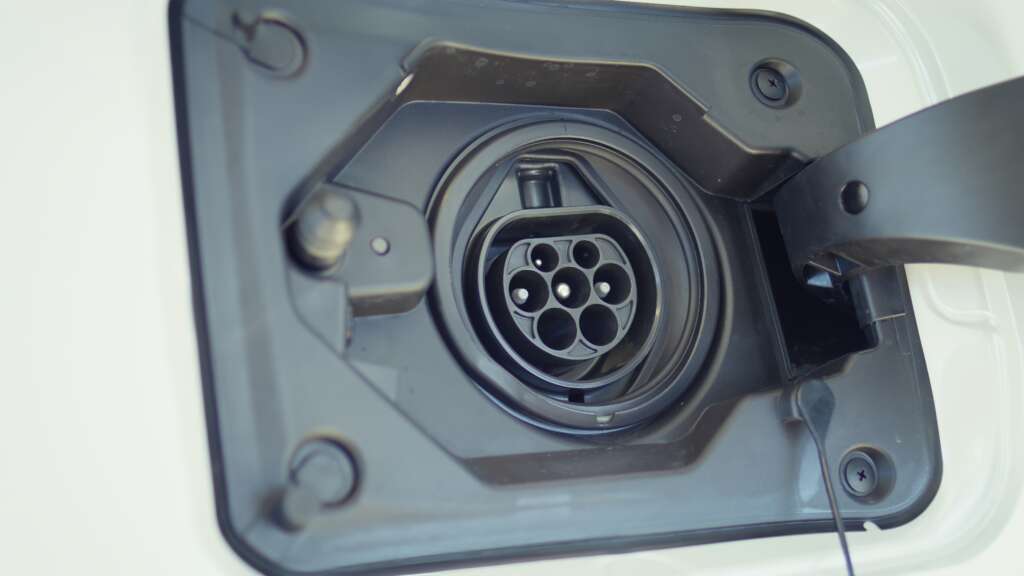
The default AC connector for passenger EVs in India. Nearly every EV launched after 2021 supports Type 2 for home, workplace, and public AC charging.
CCS2 (DC)

The dominant DC fast-charging standard in India, used by most major EV brands including Tata, Mahindra, Hyundai, Kia, MG, and BYD. If you’re using a public DC fast charger, this is the connector you’ll most often encounter.
CHAdeMO (DC)
An older Japanese DC fast-charging standard, mainly associated with earlier Nissan models. Its presence in India is now limited as CCS2 has become the dominant standard.
GB/T (AC/DC)
Widely used in China, GB/T shows up on a smaller number of EVs in the Indian market with Chinese origins or components.
Bharat AC001 / Bharat DC001
India’s own government-promoted charging standards, developed to reduce dependence on international connector standards and support indigenous EV infrastructure. Bharat AC001 handles AC charging, while Bharat DC001 covers DC fast charging both are increasingly specified in government and fleet charging deployments, even though Type 2 and CCS2 remain more common for private passenger vehicles today.
Which Charger Type Is Valid for Your EV?
| EV Brand/Model | AC Connector | DC Fast Charging Connector |
| Tata Nexon EV / Punch EV / Tiago EV | Type 2 | CCS2 |
| Mahindra XUV400 | Type 2 | CCS2 |
| Hyundai Kona Electric / Ioniq 5 | Type 2 | CCS2 |
| MG ZS EV / Comet EV | Type 2 | CCS2 |
| Kia EV6 | Type 2 | CCS2 |
| BYD Atto 3 / Seal | Type 2 | CCS2 |
| Electric two-wheelers (Ather, Ola, TVS) | Proprietary/Type 2 variants | Typically no DC fast charging check manufacturer specs |
Note: CCS2 has become the near-universal DC standard for Indian passenger EVs, but always confirm your specific model’s connector in the owner’s manual before relying on a public fast charger especially for two-wheelers and older imported models, which sometimes use different standards.
How to Find a Compatible Charging Station
Once you know your connector type, the next step is finding a station that actually supports it not every public charger offers every connector type, and showing up to a CHAdeMO-only station with a CCS2 car wastes time you don’t have.
Use our EV charging station locator to search by city and filter results by connector type, so you only see stations compatible with your vehicle before you head out.
